


The Winter of Western Civilization
"The only thing we learn from history is that we learn nothing from history." - Georg Wilhelm Friedrich Hegel (1770–1831)


Looking around at the sorry state of modern America, with its eye-watering grocery bills and criminally incompetent leadership, with its fraudulent elections, cartel-controlled borders, and the horrors of Drag Queen Story Hour, it is easy to find oneself wondering just how future generations might recall our rapidly derailing train wreck. Of course, even this is predicated on the notion that there will be future generations at all, and not just soulless legions of lab-assembled cyborgs. But, assuming our descendants do indeed cling to their flesh-and-blood humanity, it seems all but certain that they will look back upon the most abjectly demoralized, most tragically befuddled chapter in this country’s history.
Yes, the US has faced dire economic situations before. So too has it withstood social fragmentation, food shortages, moral decay, and war. What it has not endured, however, are all these tribulations at once, yet if we are to step back and adopt a more century-spanning view of our predicament, it soon becomes clear that even this confluence of clusterfucks is not entirely without precedent.
The Strauss–Howe Generational Theory
Published in 1997, The Fourth Turning: An American Prophecy lays out the argument, quite at odds with today’s fashionable faith in linear time and instinctual, inexorable advancement, that history is instead cyclical, following a season-like pattern of birth, growth, decay, death, and rebirth. This sequence - which authors Neil Howe and William Strauss refer to as ‘saeculum’- typically lasts between eighty to one hundred years (or roughly the length of a human life) and can be further divided into a series of four phases or ‘turnings’, the rotation of which corresponds with a new generation’s entry into maturity.

Each time this occurs, a country experiences not just a comprehensive overhaul in regard to its culture, values, and motivations but also, by extension, its overarching character and health of its institutions.
This evolution is driven by what Strauss and Howe call ‘archetypes.’ Although every generation inevitably undergoes significant changes throughout its lifespan, they nevertheless remain tethered to the qualities, quirks, and shortcomings which comprise its core identity – an identity which will, upon the onset of middle-age and ascension into society’s leading roles, come to represent the dominant culture and thus shape those which follow. It is this dynamic that creates the recurrent nature of saeculum and while The Fourth Turning goes some way to describing those which have made up the last five hundred years, a vast bulk of its pages are devoted to breaking down the one we are presently negotiating: The Millennial Saeculum.
The High (1946–1964)
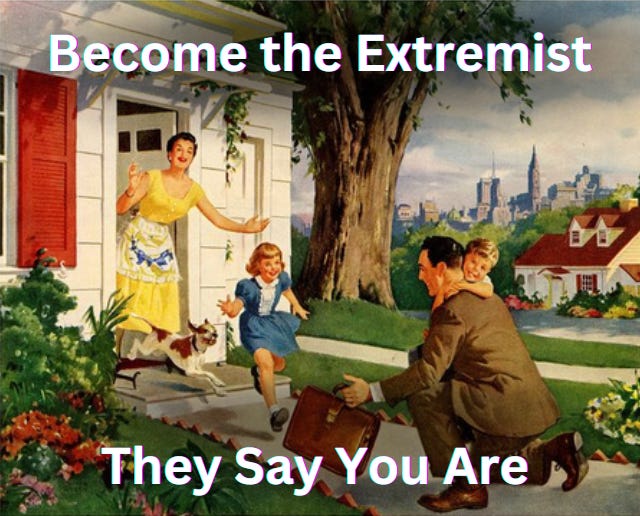
During the first turning - otherwise known as ‘The High’ - a mood of optimism and ambition prevails. As the old, outdated order recedes and is replaced by a fresh cultural and political paradigm, a population finds itself buoyed not merely by good governance and a vibrant economy, but also a level of social cohesion exceeding any within living memory.
The more historically literate reader will no doubt recognize this as a fairly succinct description of America’s post-war years. Following Japanese surrender and a flood of young men rejoining the workforce, factories modified to produce aircraft, ammunition, and armaments, now reverted to their original function, all while managing to maintain much of their wartime intensity. Electronics, household appliances, and automobiles abound. Coupled with easily accessible mortgages for returning G.I’s and a ration-weary citizenry eager to spend, spend, spend, even unskilled workers were able to provide their families with comfortable, suburban lifestyles - their homes furnished with refrigerators, range-top ovens, washing machines, and other previously unimaginable luxuries. It was the television, however, which was to prove most immediately impactful. These newly abundant devices would allow America to congeal around nightly installments of I Love Lucy, Leave it to Beaver, and later the Space Race, offering society the shows and shared experiences which would constitute some of the most enduring images of the age. As the authors put it:
“Thanks to vintage TV and nostalgia movies, deeply etched memories of the American High are continually recalled decades later. People now in their forties or older widely remember this as an era when large institutions were regarded as effective, government as powerful, science as benign, schools as good, careers as reliable, families as strong, and crime as under control. Government could afford to do almost anything it wanted, while still balancing its budget. From year to year, the middle class grew, and the gap between rich and poor narrowed. Worker productivity and family incomes grew at the fastest pace ever measured, with no end in sight.”
With this newfound stability came an explosion in the number of babies being born. Enter the Boomer. Growing up in a time of relative affluence, raised by parents accustomed to the deprivations of war but now looking forward to a peaceful and prosperous future, this over-indulged, education-orientated generation were able to spend their childhood largely untroubled by the existential concerns which had so gripped the nation just a few years prior. Now, they were able to ruminate on far more abstract matters. Set against a soundtrack of rock ‘n’ roll and the boundary-pushing rhetoric of the Beat Poets, the idyllic circumstances into which Boomers had been born began to appear shallow, senseless, and artificial. It was not just the stifling conformity that defines the latter stages of first turnings. Neither was it the flagrant injustices their parents seemed content to ignore. Rather, what Boomers came to despise was society’s obsession with teamwork at the expense of personal fulfillment, its insistence upon genial uniformity to the detriment of spiritual growth - an idealism which would prompt Strauss and Howe to confer upon them the status of a “Prophet Generation.”
The Awakening (1964–1984)
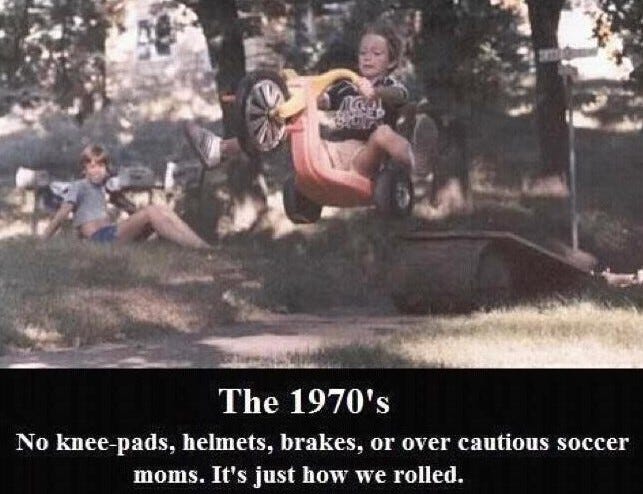
Even in America, a country with an innate flair for the dramatic, there can surely have been few more whiplash transitions from one stage of a saeculum to the next than that which occurred on the afternoon of November 22, 1963. True to all second turnings, the decades following John F. Kennedy’s assassination (recently but belatedly acknowledged as a CIA coup) were to prove a time of maturation and intense, impassioned upheaval as Baby Boomers - those whose fledgling political awareness had been so intertwined with the hope-inspiring young president - sought to tear down the picket fence monotony which they blamed for society-wide cultural and spiritual stagnation.
There seems little reason to describe how this materialized. From the riots at Stonewall to the bra-burning antics of the Woman’s Liberation Movement, from the speeches of MLK to the protests opposing the war in Vietnam, the 60s and still more the 70s will forever be remembered for their striking juxtaposition between government hubris and youthful, violent dissent. The artistic expressions of this remain peerlessly iconic. As was so singularly embodied by the events of Woodstock, America was experiencing a shift in focus from the outer to the inner world, a phenomenon reflected in the music of Jimmy Hendrix, a fascination with psychedelic drugs, as well as a smorgasbord of imported Eastern philosophies that, in their totality, would become known as the Consciousness Movement.
Perhaps unsurprisingly in this atmosphere of feminism, free love, and birth control, children were to take something of a back seat. As fertility plummeted and divorce rates soared, culture became increasingly defined by a Hollywood-amplified egoism which derided family life and the pressures of parenthood as impediments to one’s personal happiness. Babies born during this period - those known as Generation X - would ride out lonely, neglected childhoods, growing up without boundaries, without expectations, and often without any parental supervision whatsoever. It was just such an upbringing that would mold Gen Xers into an alienated, independent, but above all resilient generation of Nomads; Howe and Strauss asserting:
“Ask today's young adults how they were raised, and many will tell you that they raised themselves—that they made their own meals, washed their own clothes, decided for themselves whether to do homework or make money after school, and chose which parent to spend time with on weekends (or side with in court). They grew up less as members of family teams, looking forward to joining adult teams, than as free agents, looking forward to dealing and maneuvering their way through life's endless options. In their childhood memory, the individual always trumped the group. During the Consciousness Revolution, as older generations stripped away the barriers that had previously sheltered childhood, (Gen Xers) were denied a positive vision of the future—denied, indeed, any reassurance that their nation had any collective future at all.”
The Unraveling (1984–2008)

As Gen X entered adolescence, so too did they continue to embrace the mantras of liberation passed down from their parents. But while Boomers might bask in their reputations as this saeculum’s quintessential rebels, so too did they continue to enjoy the privileges of a society still rooted in its most foundational principles.
Gen Xers lacked this safety net. Coinciding with the re-election of President Reagan, their ascent into adulthood (which also denoted America’s entry into the third turning) would see the country melt into a miasma of different subcultures and interest groups, consensus deteriorating from the merely illusive to the nigh on impossible. Political strife followed. In America, this played out largely in the form of riots and worsening race relations but all across the Western world, both longstanding tensions and newly imported resentments were bubbling to the surface, their unquestionable crescendo the events of 9/11.
Confidence in the nation’s future darkened.
Civic and moral paralysis set in.
The slacker mentality and shrugging nihilism which had come to define Gen X only further fostered a climate ripe for school shootings and empty, ego-driven consumerism; artists forgoing their traditional pursuit of truth and beauty in order to venerate mindless violence, indiscriminate sex, and the dreary, desolate realism of everyday life.
It was amid this malaise that millennials were born. It will no doubt surprise many readers of this article, as it assuredly did its author, that according to Strauss and Howe’s theory, this generation - frequently identifiable by their pronoun badges and apoplectic reaction to microaggressions - are in fact a generation of Heroes. But as the authors elaborate:
“The Hero archetype is made, not born, and the making begins in childhood at the hands of parents gripped with spiritual confidence and secular anxiety. Newly perceived as dangerous, the child environment is pushed back toward greater protection and structure. Children are urged to be obedient achievers and team players [. . .] To older Prophet parents, Hero children are instruments through which their inner visions can someday be achieved. To younger Nomad parents, they are beneficiaries of a hard-fought effort to rediscover and reclaim a close family life.”
Perhaps the reader has seen some evidence of this. Certainly, as a member of that oft-derided generation, I find myself compelled to point out that virtually since birth, we Millennials have been subjected to a highly sophisticated, lavishly funded, and inescapably pervasive attempt to bludgeon us into political orthodoxy. Naturally, many did not make it out with their minds intact. That said, even in the face of such unrelenting propaganda, spewed both from our iPhones and our college professors, still there remains plenty of Millennials who possess not just the capacity to discern the establishment’s true agenda, but also the grit to resist it. Sure, this courage might pale in comparison to that exhibited by our predecessors in the G.I Generation and yet it is a resilience sure to be called upon as we venture through the final, most turbulent phase of our saeculum.
The Crisis (2008–present)
Although a quarter of a century has passed since its publication, it seems fair to say that The Fourth Turning has proved little short of prophetic in predicting how the intervening years would unfold. If anything, the events following the financial collapse of 2008, that watershed moment which crushed the hopes of millions and marked America’s passage into the final phase of this saeculum, must surely have exceeded, both in terms of global impact and undiluted, cattle-brained stupidity, anything Strauss or Howe could reasonably have foreseen.
Needless to say, it was the COVID Hoax which propelled this downfall into society’s collective consciousness. But as inflation soars ever higher and the war in Ukraine threatens to subsume the rest of Europe - as the MSM starts floating the idea of climate lockdowns and drip-feeding us more puff pieces on “fifteen minute cities” - those of us who saw through the PSYOP from the get-go are already bracing, just as Strauss and Howe are, for an even more transformative catastrophe still looming on the horizon:
“History is seasonal and winter is coming. The very survival of the nation will feel at stake. Sometime before the year 2025, America will pass through a great gate in history, commensurate with the American Revolution, Civil War, and the twin emergencies of the Great Depression in World War II. The risk of catastrophe will be high. The nation could erupt into insurrection or civil violence, crack up geographically or succumb to authoritarian rule. If there is a war, it is likely to be one of maximum risk and effort – in other words, a total war.”

But however ominous any of this may sound, it is worth remembering, if only for one’s psychological wellbeing, that crises of such magnitude, be it the American Civil War or the Wall Street Crash of 1929, have historically provided the conditions for a new saeculum to emerge. Just as how winter kills off old vegetation in order to make way for the arrival of spring, the Strauss-Howe Generational Theory contends that periods of upheaval like the one fast approaching are required to purge society of the cultural and political deadwood accumulated over the last eighty-something years. If this hypothesis holds true then children born during this period - those dubbed Generation Z - will blossom into community-orientated, consensus-driven Artists, inheriting a world, fresh from its brush with oblivion, which is hungry for stability, eager to rebuild, and ultimately, beginning to rediscover an essential sense of itself.
A New Saeculum or The Great Reset?
With all this in mind, neither should authors William Strauss and Neil Howe be mistaken for oracles, divining messages passed down from on high. Hell, they aren’t even technically historians. Instead, they are but keen observers of patterns - patterns which, when stretched across millennia and applied to a species as capricious as ours, will invariably be met with disruption.
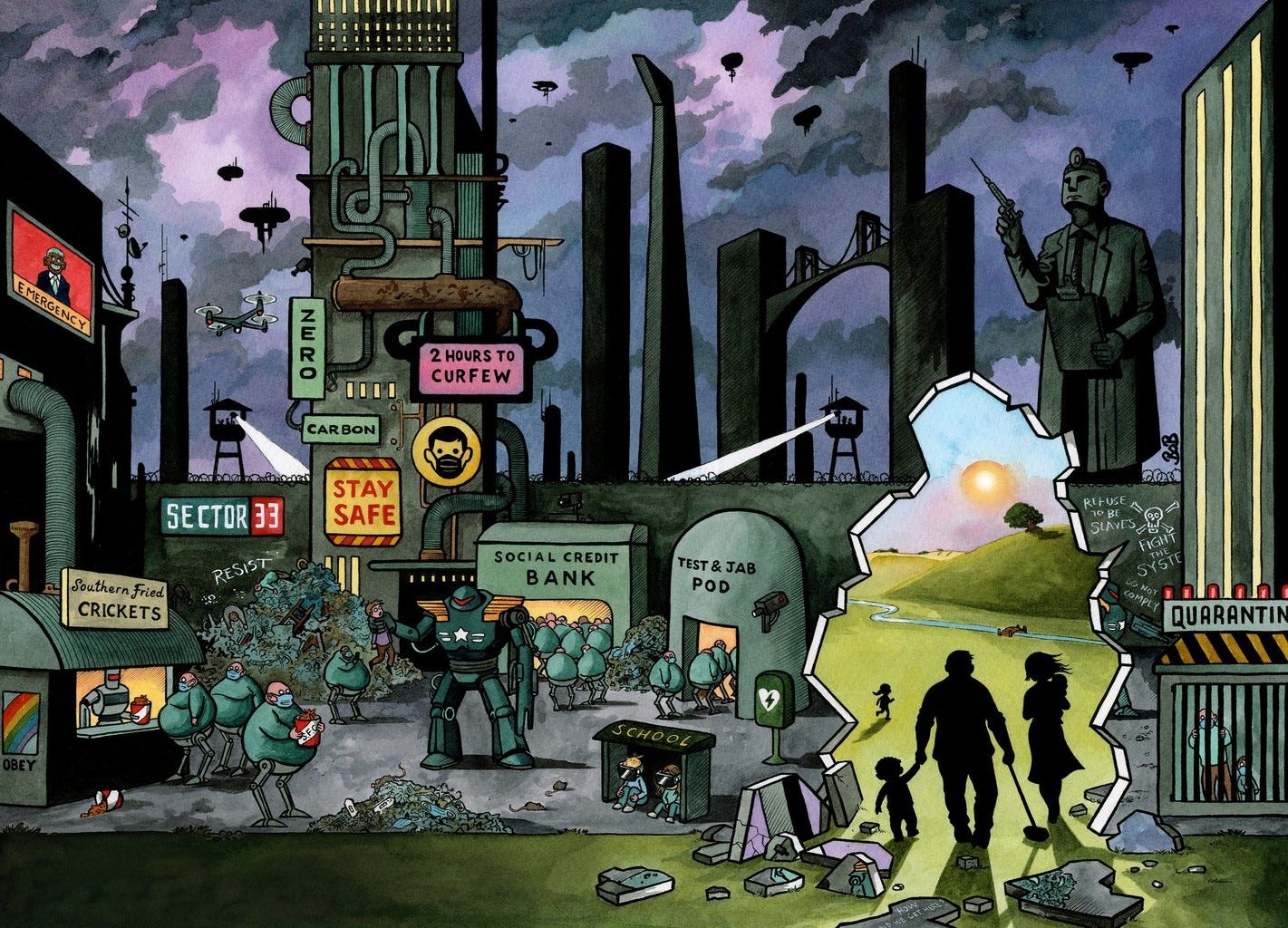
And today, that disruption comes in the form of Klaus Schwab and the rest of his globalist cohorts. Unlike saecula past, the current ruling establishment now possess – or at least, believe they possess – the means not just to arrest the rhythms of history, but to actively steer them in a direction of their choosing. This in effect, is what the Great Reset represents. In the years to follow, as the MSM begins touting digital IDs, first as a “human right” and then as a solution to our alleged ecological woes - while the same people who lined up for their boosters enthusiastically extol the conveniences of CBDCs - America (and indeed the entirety of Western civilization), is going to find itself standing at perhaps the most momentous crossroads in its history. Whether mankind follow the elite into the abyss of a one-world government or whether we awaken to the reality of our own enslavement, not even the visionaries behind The Fourth Turning can say. It is even possible that the coming decade may fatally undermine the authors’ most central premise and yet, what the Strauss-Howe Generational Theory most convincingly articulates, far from some blueprint for destiny, is the faith that no matter how cold or how dark winter might get, sooner or later, spring must once more begin anew.
Crypto Donations:
Bitcoin: 1MHzr38VAc3g5cucBGiT8axXkiamSAkEkZ
Ethereum: 0x9c79B04e56Ef1B85f148CaD9F4dBD4285b2f9E69
The Fourth Turning: An American Prophecy - What the Cycles of History Tell Us About America's Next Rendezvous with Destiny
by Neil Howe & William Strauss, 1996
459-page PDF
https://ia804506.us.archive.org/0/items/the-fourth-turning-an-american-prophecy-what-the-cycles-of-history-tell-us-about/The%20Fourth%20Turning%20An%20American%20Prophecy%20-%20What%20the%20Cycles%20of%20History%20Tell%20Us%20About%20Americas%20Next%20Rendezvous%20with%20Destiny%20by%20William%20Strauss%2C%20Neil%20Howe%20%28z-lib.org%29.epub.pdf
Into the Fourth Turning
A Casey Research interview with Neil Howe, co-author of The Fourth Turning
17 page PDF
https://files.caseyresearch.com/archived/wp/media/pdfs/1255444078-0909TheFourthTurning.pdf
https://open.substack.com/pub/william3n4z2?r=1kb28q&utm_medium=ios